Agentschap relatie betekenis
In de organisatiekunde verwijst het begrip "agentschap" naar de agentschapstheorie. Deze theorie is een belangrijk concept dat wordt gebruikt om de relatie tussen verschillende partijen in een organisatie te begrijpen, meestal tussen aandeelhouders (de principaal) en bedrijfsleiders (de agent). Een agentuur, ook agentschap, agent en handelsvertegenwoordiging genoemd, is in het Belgisch en Nederlands recht een rechtspersoon of andere juridische entiteit die als tussenpersoon activiteiten ontplooit en zakelijke belangen behartigt namens een andere (rechts)persoon, veelal (ook) in het buitenland. Agentschap relatie betekenis De agency-theorie is een belangrijk concept in de economie en het organisatiemanagement dat zich richt op de conflicten en uitdagingen die voortkomen uit de relatie tussen principaal en agent.

Agency relationship definition An agency relationship is created when one person or entity agrees to perform a task for, and under the direction of, another individual or entity. An agent is the person who is authorized to act for or in place of another. A principal is the person who authorizes another to act on his, her, or its behalf as an agent.


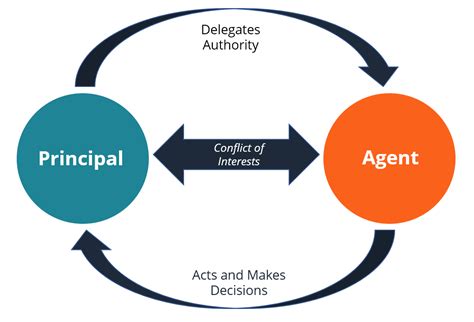
Agent principal relationship A principal-agent relationship describes the relationship between a business or individual and someone hired by that business or person to act on their behalf. The principal is the business entity (or hiring individual), while the agent is the entity hired to act on behalf of the principal.

Agency relationship definition
Learn what an agency relationship is, how it works, and what are the rights and duties of principals and agents. Find out how to hire a lawyer to help you with agency law issues on UpCounsel's marketplace. Agency law is a common law doctrine controlling relationships between agents and principals. A principal-agent relationship is created when the agent is given authority to act on behalf of the principal.Fiduciary duty agency
of fiduciary duties, agency relationships are categorically treated as fiduciary.1 For the most part, the Chapter focuses on common law, albeit referring at points to statutes and regulations applicable to specific agency relationships. My article, A Theory of Calibrated Fiduciary Duties in Firms, 51 Journal of Corporate Law (forthcoming ), theorizes the idea of calibrated fiduciary duties, which explains why the law does and should vary the fiduciary standards of conduct in agency, noncorporate firms, and corporations. Fiduciary duty agency Fiduciary duties in agency law are essential to maintaining trust and integrity within business relationships. By understanding these duties, agents and principals can navigate their responsibilities effectively, ensuring compliance with legal standards.Principal agent problem
What Is the Principal-Agent Problem? The principal-agent problem is a conflict in priorities between a person or group and the representative authorized to act on their behalf. The principal–agent problem refers to the conflict in interests and priorities that arises when one person or entity (the "agent") takes actions on behalf of another person or entity (the "principal"). [1].Principal agent problem Learn what is the principal-agent problem, a situation where an agent has different incentives than a principal. See examples, causes, costs and solutions of this market failure.